From a game to flashcards
Ruura (ルーラ) turns the Japanese you encounter in games into vocabulary you can actually study. It takes footage, pulls out the dialogue, finds the words worth learning, and turns them into spaced-repetition flashcards — without ever losing the original context. Here's the whole arc.
Watch the game, read the lines
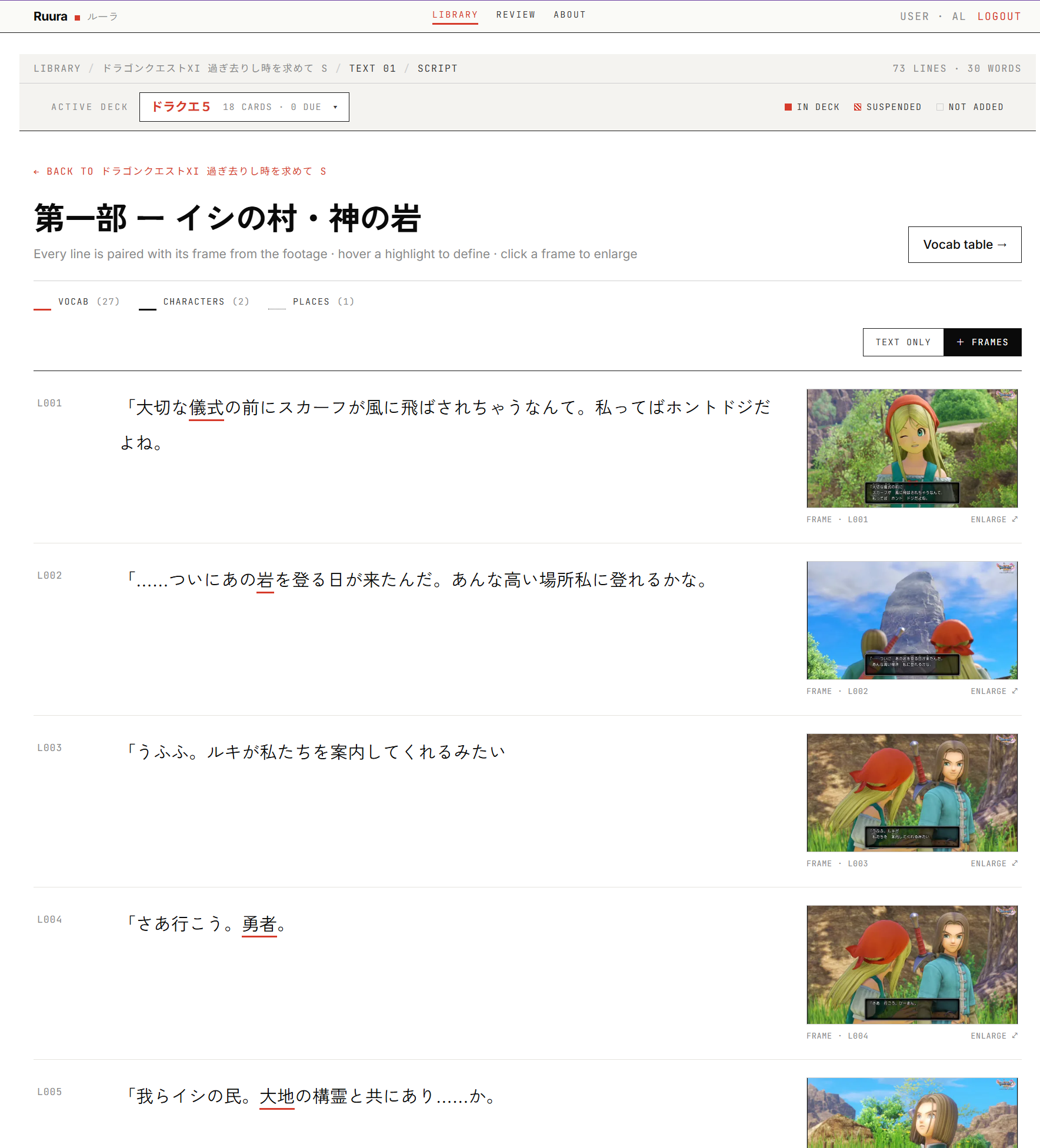
Ruura starts with raw gameplay footage. A pipeline called inpasu samples the video, finds the dialogue box on screen, reads the Japanese with OCR, and stitches the results back into an ordered script — every line paired with the exact frame it appeared on.
The result is a browsable, spoiler-aware transcript of a game, section by section.
Pull out the words worth learning
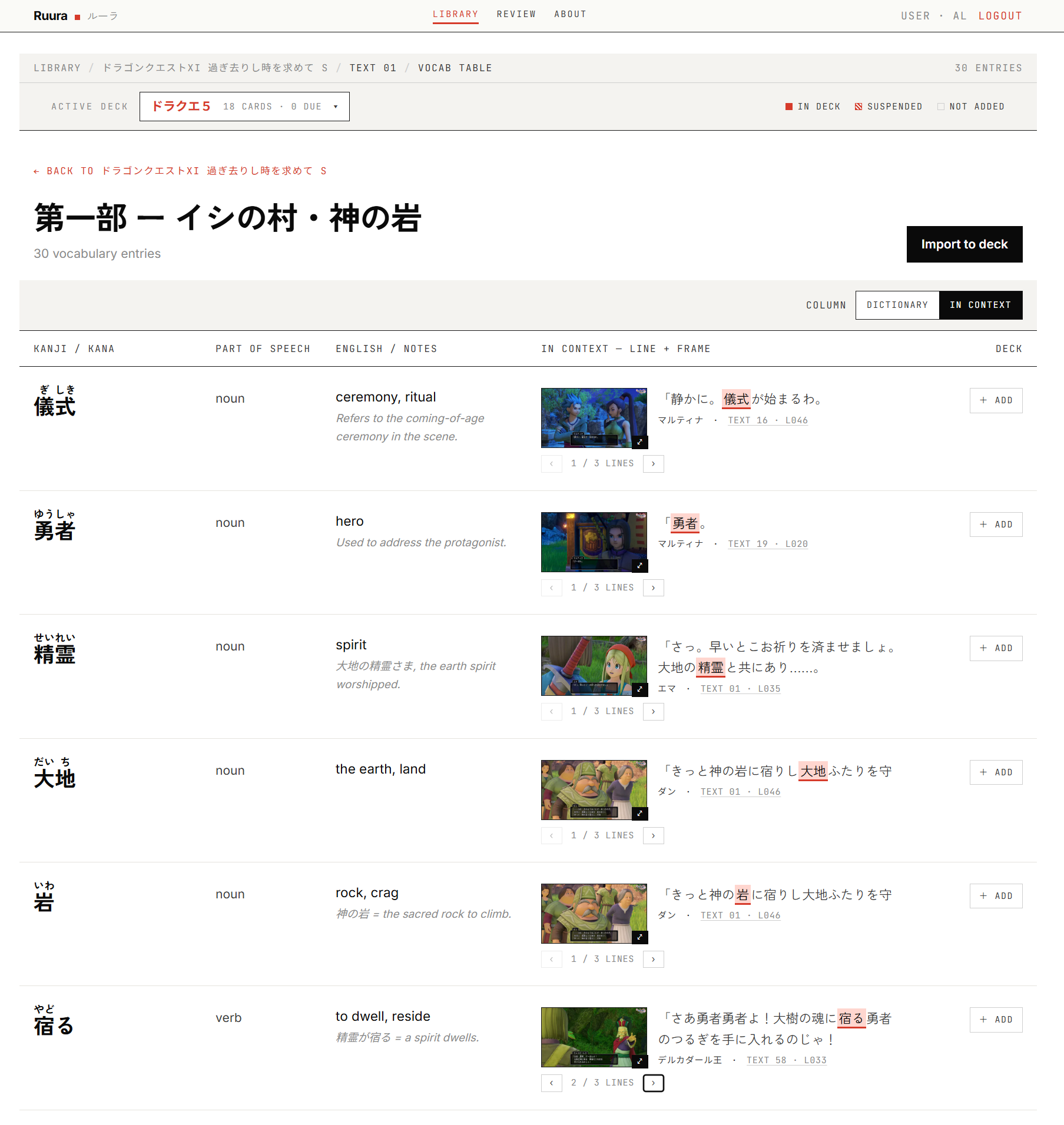
Claude reads each section and identifies the vocabulary a learner actually needs — with readings, part of speech, and a plain-English gloss. Duplicates across a title are filtered out, so you study each word once.
Every entry keeps its receipts: a real in-game line where the word appears, with the moment from the footage right beside it.
Study it, remember it
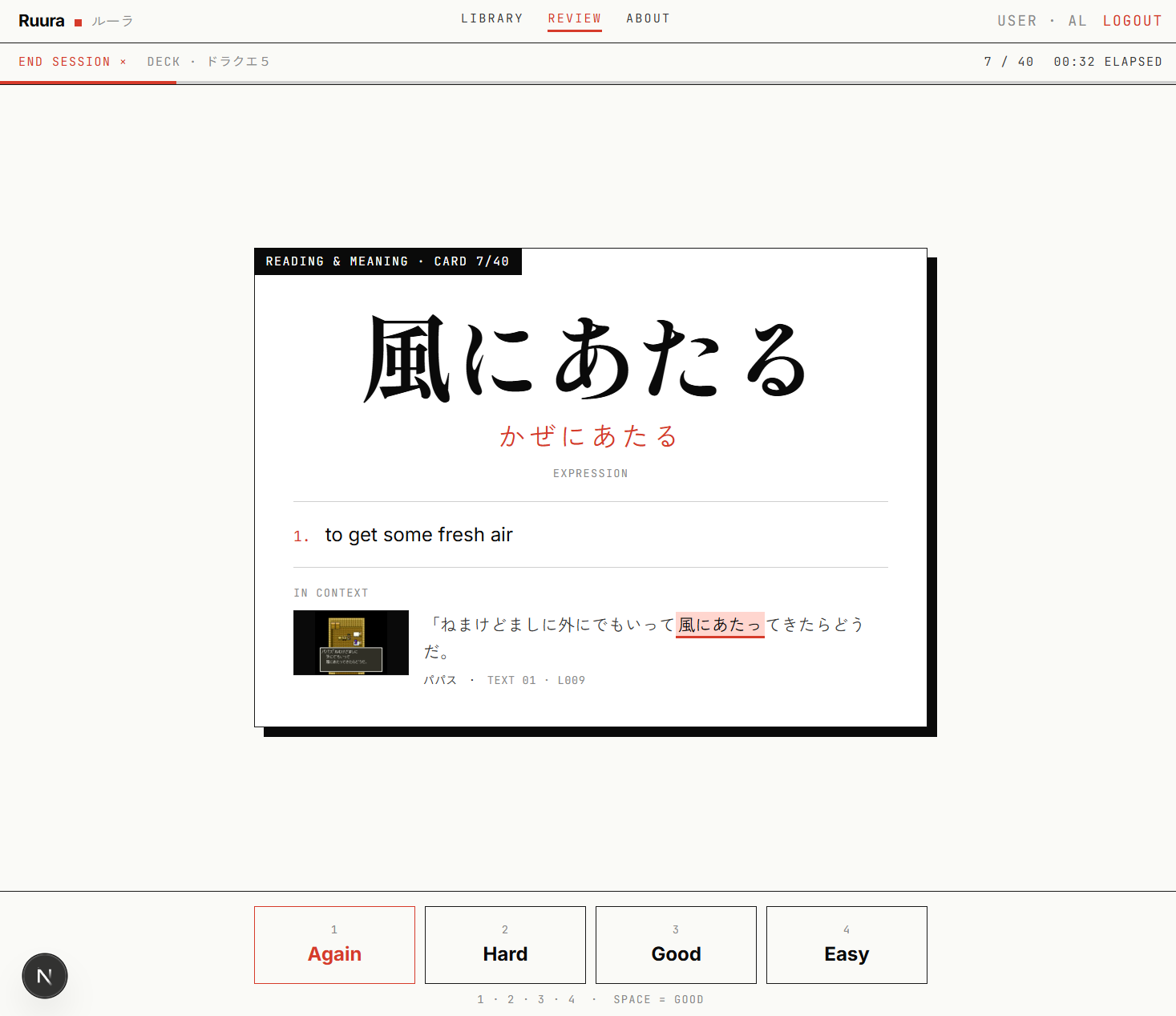
Send a section's vocabulary to a deck and it becomes flashcards with spaced-repetition scheduling. Each word is studied two ways — reading recall and kanji recall — tracked independently.
The card back still shows the word in its original game context, so you're never memorizing in a vacuum.
How a video becomes a script
A stage-by-stage deep dive into the dialogue-extraction pipeline behind step 01 — worked end to end on one real frame.
Acknowledgements
The open data, libraries, and tools that make Ruura possible — from JMdict to the corpus behind the in-game examples.